

What is E-E-A-T in SEO
You might be reading this blog because you want to know the concept of E-E-A-T in SEO and how to optimize within your content. You can spend hours creating high-quality content, yet still find it ranked on page two of Google’s search results.
The key difference between top-ranking content and overlooked pages is often E-E-A-T: Experience, Expertise, Authoritativeness, and Trustworthiness. E-E-A-T is Google’s standard for assessing content quality, particularly for important topics such as health, finance, or legal advice.
E-E-A-T shows Google that your content is credible, reliable, and trustworthy for your audience.. By applying E-E-A-T principles, you can improve your rankings, attract more visitors, and build a loyal readership.
This blog explains what E-E-A-T in SEO means, why it is essential for 2025, and provides actionable strategies to optimize your content.
What is E-E-A-T?
E-E-A-T is Google’s way of measuring whether your content shows real expertise, trust, and value for readers. It is not a singular score but a combination of indicators that show whether your page is helpful, accurate, and trustworthy.
Your content gets high value by adding the E-E-A-T framework, which will increase your chances of getting a high ranking in search results.
Let’s break it down.
The Four Pillars of E-E-A-T
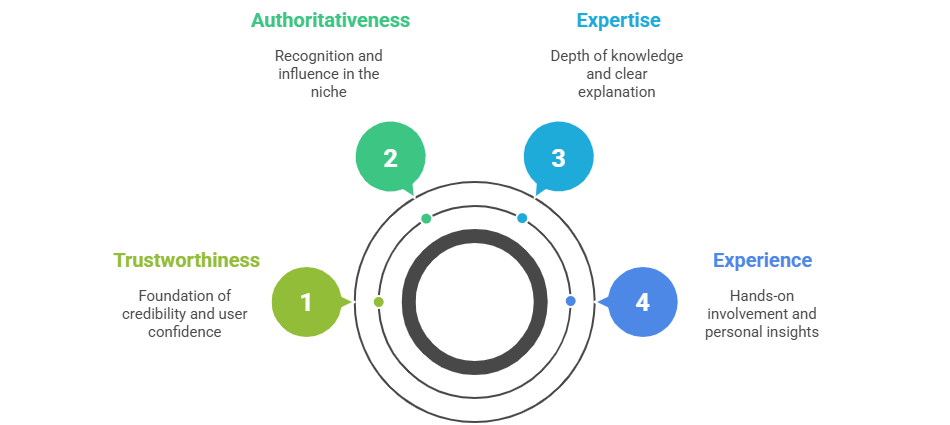
Experience
What it means: First-hand use, testing, or real-world involvement with the topic.
How to show it:
- Share hands-on examples: screenshots, photos, step logs, or before/after results.
- Add mini case studies: what you tried, what worked, metrics.
- Include personal insights that a generic summary can’t provide.
Why it helps: Demonstrating experience shows you have conducted the work yourself, rather than simply repeating others’ information. This establishes immediate credibility.
Expertise
What it means: Depth of knowledge and the ability to explain clearly and accurately.
How to show it:
- Publish well-researched explanations with sources.
- Use correct terms, but keep language simple for readers.
- Highlight credentials or training where relevant (courses, certifications).
Why it helps: Expertise shows you know the field, so users and search engines can rely on your guidance.
Authoritativeness
What it means: Recognition from others in your niche, mentions, citations, quality backlinks, and a positive reputation.
How to show it:
- Earn mentions and links from reputable sites.
- Be quoted or featured in industry roundups, podcasts, or local news.
- Keep a strong About page and clear author profiles across your site.
Why it helps: Authority signals that your peers and the wider web consider your content worth referencing.
Trustworthiness
What it means: Your site is safe, transparent, and honest.
How to show it:
- Use HTTPS, clear contact info, and visible policies (privacy, terms, returns if applicable).
- Add author names, headshots, and reviewer credits where relevant.
- Provide source citations and correct errors with update notes.
Why it helps: Trust is the foundation. Without it, experience and expertise won’t matter.
Why E-E-A-T is Important for SEO
- Better rankings for important queries: Pages that demonstrate credibility tend to surface for competitive terms.
- Higher engagement: Helpful, credible content keeps people on the page longer, which often improves conversions.
- Stronger brand: Clear authorship, references, and useful examples build long-term trust with users and with Google.
- Future-proofing: Quality guidelines shift, but content grounded in E-E-A-T stays relevant.
How to Write E-E-A-T Content (Step by Step)
Step 1: Nail the Question and Search Intent
Identify a specific question your audience is asking. Align your content with their intent, whether it’s a beginner guide, checklist, or tutorial.
Step 2: Structure with Clear, Helpful Headings
Break your article into sections using H2 and H3 tags. This helps readers scan easily and understand each step without confusion.
Step 3: Showcase First-Hand Experience
Share your unique process, results, or real-world examples. This builds trust and makes your content stand out as authentic.
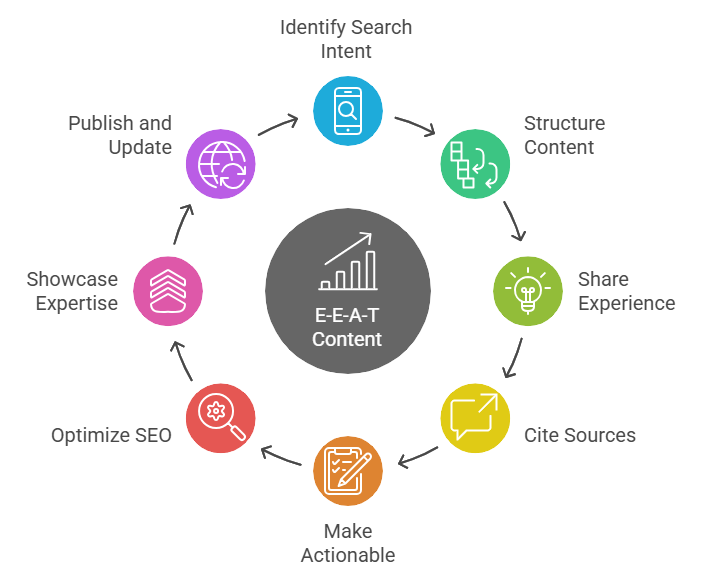
Step 4: Back It Up with Reputable Sources
Cite trusted standards, research, or official documents. Simplify Complex Ideas for Easy Understanding to keep readers engaged.
Step 5: Make Action Easy and Practical
Include checklists, templates, or quick tips. Actionable content keeps readers invested and encourages them to apply your advice.
Step 6: Optimize for On-Page SEO
Craft eye-catching title tags, compelling meta descriptions, and descriptive alt text to improve search engine optimization and user accessibility. Include internal links to related content for improved navigation and SEO ranking.
Step 7: Showcase Author Expertise & Page Credibility
Showcase the author’s impressive qualifications and extensive experience, while also making sure to include their contact information. Follow content guidelines to build more trust and credibility.
Step 8: Publish, Promote, and Keep It Fresh
Share your content on relevant platforms and gather feedback. Update regularly to ensure it stays accurate and valuable.
Conclusion
E-E-A-T is still central to SEO in 2025. It doesn’t replace keywords or links; it multiplies their impact by proving your content is useful, credible, and safe to recommend. Focus on experience, back it with expertise, earn authority through recognition, and protect trust with transparent practices.
Next step: Audit one key page on your site today. Add a stronger author bio, one real example, two reputable citations, and an internal link to a related service page. Small improvements add up quickly, or connect with an SEO expert.
FAQs
Is E-E-A-T still relevant?
Yes, E-E-A-T is still important for ranking. Google focuses on high-value, trustworthy content. E-E-A-T helps your pages stand out for important searches.
What is Google E-E-A-T ranking?
There’s no single “E-E-A-T score.” It’s a set of signals (experience, expertise, authority, trust) that guide how Google evaluates quality.
Why is E-E-A-T important?
It helps search engines identify reliable content and helps users feel safe taking action. This often leads to better rankings and conversions.
What is E-E-A-T in digital marketing?
It’s the framework marketers use to build trustworthy content and brands online through real experience, qualified insights, recognized authority, and strong trust signals.
What is “experience” in E-E-A-T?
Proof that you actually did or used the thing you’re writing about tests, experiments, photos, logs, and results.
What are the factors of Google E-E-A-T?
Experience, Expertise, Authoritativeness, and Trustworthiness, supported by signals like citations, reviews, bios, and clear policies.
What is E-E-A-T in content writing?
Writing that demonstrates real use, accurate knowledge, recognized reputation, and clear trust markers presented in a helpful, easy-to-follow format.

0 Comments